Portuguese tiles (azulejos) originate from ceramic decoration developed in Egypt and brought to the Iberian Peninsula by the Arabs during the 13th century. The word azulejo itself comes from the Arabic term al-zulaich, meaning “small polished stone.” Initially, this “polished stone” referred to small fragments broken from a larger piece, with irregular shapes.
Once introduced in Spain and Portugal, this practice evolved significantly, becoming simplified, standardized, and adapted to Western styles.
The first Portuguese tile workshops date back to the early 16th century, based on the Moorish technique and later developing into the faience technique, which was derived from Italian majolica.
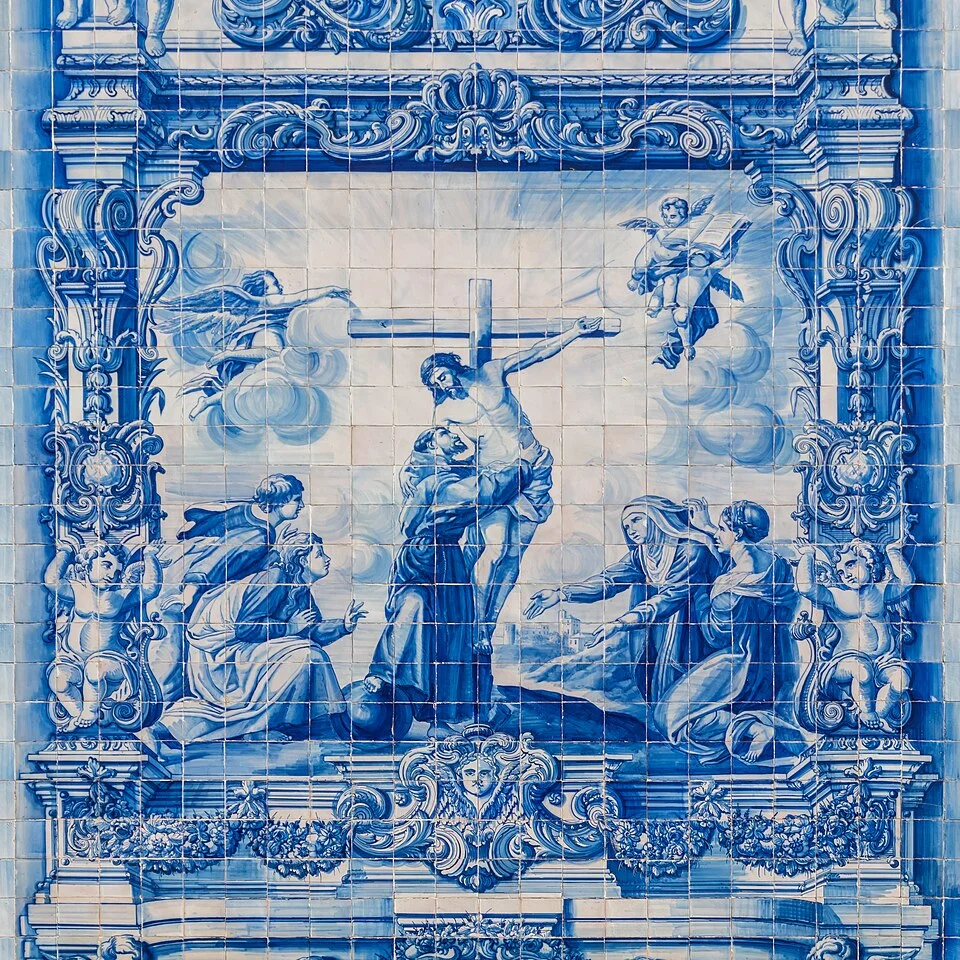
The Age of Portuguese Discoveries brought thematic inspiration to tilework – religious, mythological, and satirical scenes, as well as depictions related to hunting, war, and exotic beauty. These were represented in large, custom-made panels designed to harmonize with architectural spaces, used to cover and decorate religious, royal, and noble buildings, and as a means of renewal, expression, and representation of the dominant culture of the time. This innovation is precisely what came to distinguish Portuguese tilework from any other in the world.
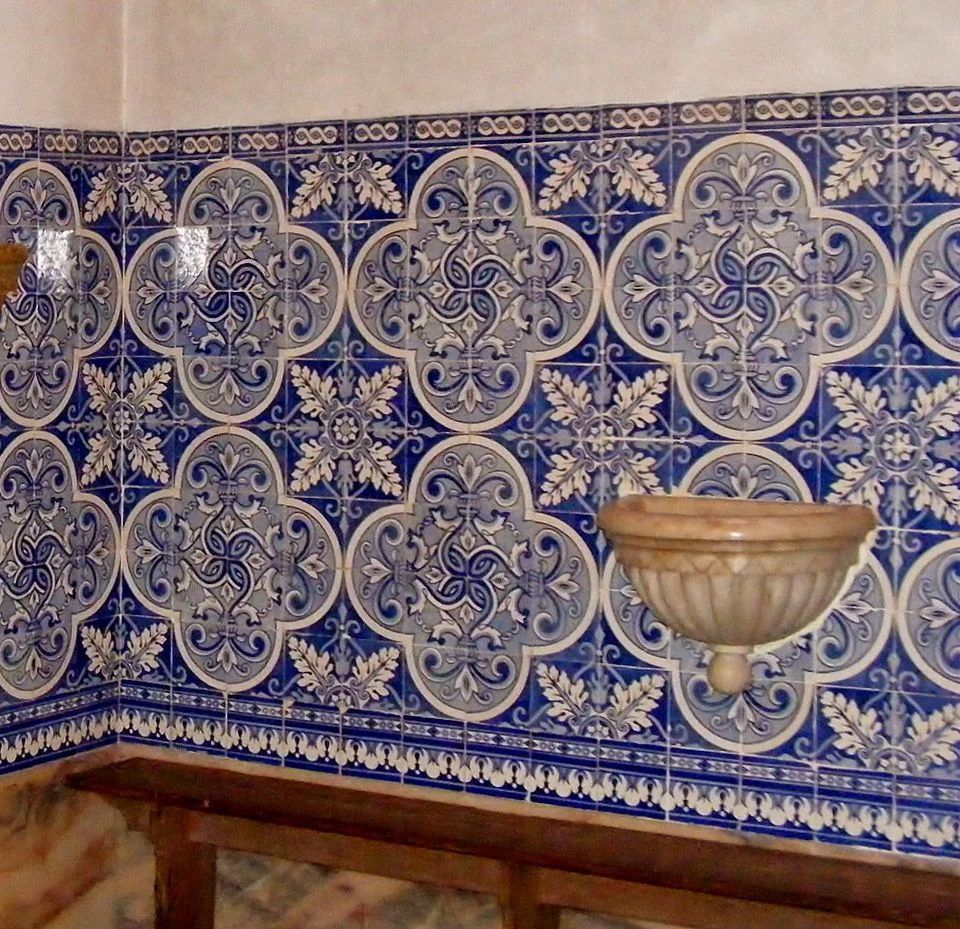
Alongside thematic and figurative tilework, patterned or repetitive tiles also emerged. Produced in large quantities and easy to apply – using modular combinations of borders, bands, and central patterns – these helped expand the popularity of azulejos to all social classes and architectural contexts, from public and functional spaces to private homes and interior rooms, from the 16th century to the present day.
The history of azulejos is a unique example of timeless resilience and renewal in Art and Architecture.